Gross and net yield: the formulas
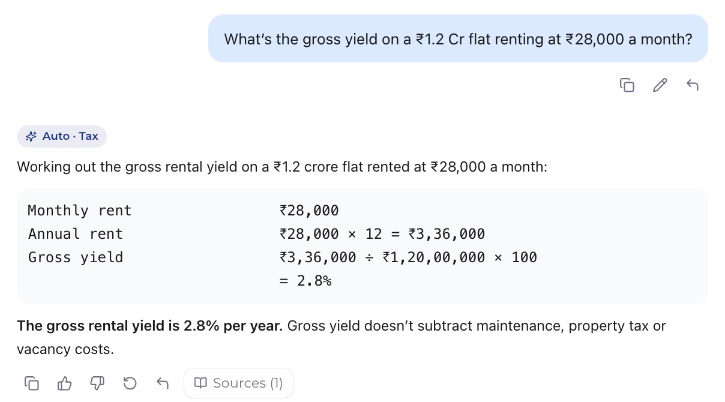
Gross yield = yearly rent ÷ property price × 100. Net yield = (rent received in the year, minus yearly costs such as maintenance and property tax) ÷ property price × 100.
Take a ₹1 crore flat renting at ₹30,000 a month, empty for one month a year, with maintenance and tax at 1% of its value. Gross yield is 3.6%. After a month's lost rent and ₹1,00,000 in costs, the flat earns ₹2,30,000 a year, a net yield of 2.3%.
How to calculate ROI on a rental property
Yield compares rent with the price. ROI compares what you earn with all the cash you put in. Cash-on-cash ROI here is yearly net income ÷ (price + purchase costs + renovation) × 100. In the example above, with purchase costs at 7%, that is 2.1%. It takes about 47 years for rent alone to return the money.
This calculator looks at rent only. It leaves out any rise in the property's value, home loan interest and tax on the rent, so add those to your own sums before you decide. The EMI calculator helps with the loan side, and the stamp duty calculator with purchase costs.
What counts as a good rental yield in India
Many Indian homes yield roughly 2% to 4% gross, which is a rule of thumb and not a measured figure. We don't publish yields by city because we haven't found a source we trust for them. Check real rents for similar flats nearby instead of the seller's estimate.
A yield near the top of that range may suit someone buying for income. A lower one can still make sense if you expect the property's value to grow or plan to live in it later, but then you are relying on that growth and not on the rent.
Monthly rent, vacancy and what you actually receive
One empty month a year takes about 8% off your rent. Between tenants you may also pay for repainting, repairs and a broker. Society charges and property tax are usually yours to pay too, unless the agreement says otherwise. Enter your vacancy and maintenance in the calculator to see the effect.
The 2% rule and price-to-rent ratio
The 2% rule is a rough test, common in the US, that monthly rent should be about 2% of the price. At typical Indian yields, a home rarely comes close to it, so it isn't a useful target here.
Price-to-rent ratio is the price ÷ yearly rent. In the example above it is about 28, meaning 28 years of rent to equal the price. A lower number means rent is high compared with the price.
These are calculations from the numbers you enter, not financial advice or a forecast. Rents and costs vary by building, so check them locally.