Building a House
Evaluating PropertyEssential
Hidden red flags in projects
A practical India-focused guide to spotting property risks before booking an under-construction flat
7 minutes read· Last updated 28 Apr 2026
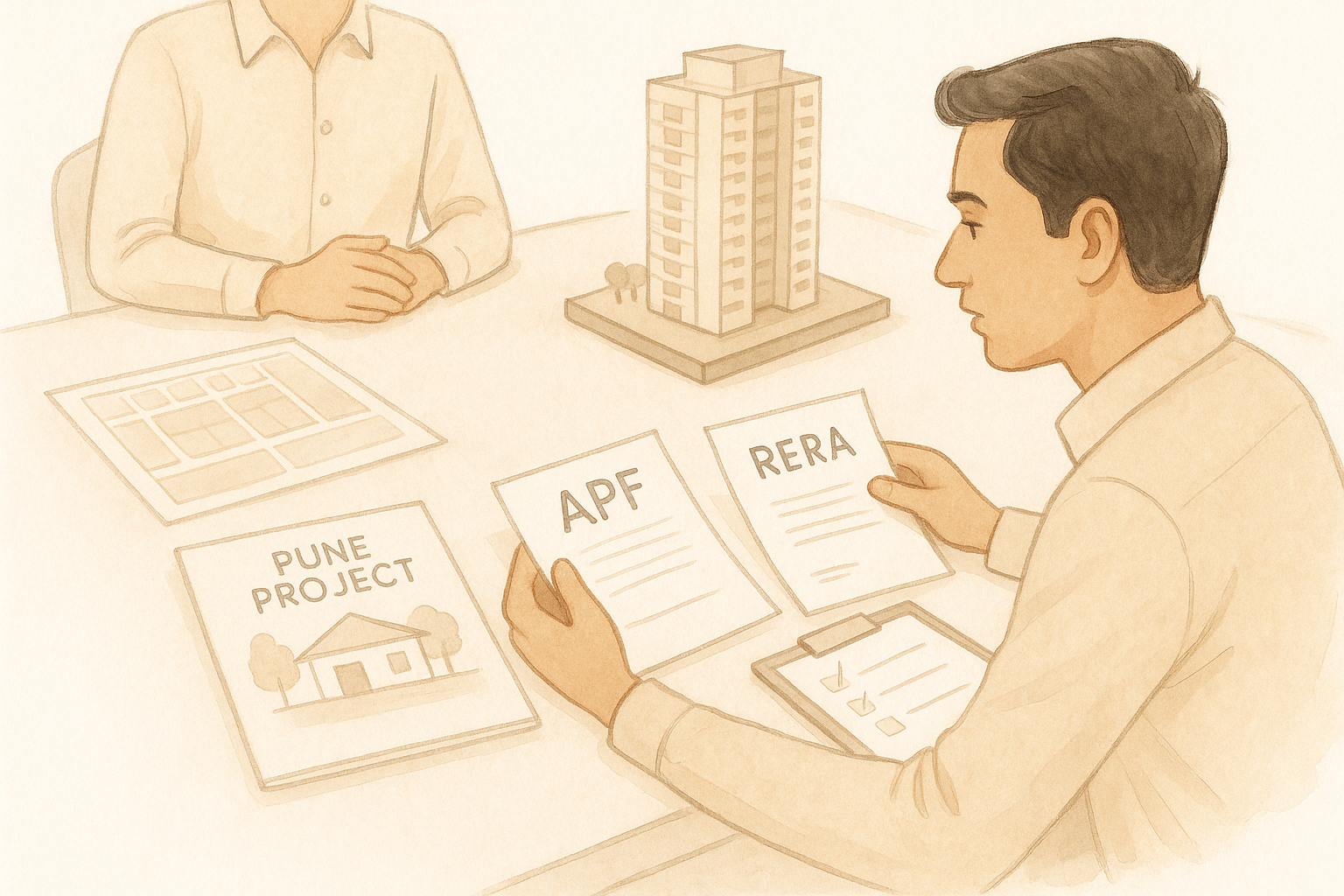
Buying a home in India is rarely just about carpet area, amenities and the sample flat. The real risks are often hidden in the project’s approvals, location, builder communication, loan status, construction quality and resale potential. By the time many buyers discover these issues, the booking amount is paid and exit becomes difficult.
This is especially true for under-construction apartments in fast-growing markets such as Pune, Mumbai Metropolitan Region, Bengaluru, Hyderabad, Noida, Gurgaon and Chennai. Projects may look attractive on brochures, but there can be problems like nearby STP plants, garbage dumping zones, delayed sanctions, unclear land title, poor access roads, or bank approval issues.
The goal is not to find a “perfect” project. No project is perfect. The goal is to know the red flags before you pay, compare options honestly, and choose the project where the risk is acceptable for the price.
Why Most Property Red Flags Stay Hidden
Builder sales offices are designed to highlight advantages and reduce buyer hesitation. The sales team knows the most common questions buyers ask: possession date, discount, floor rise, amenities, maintenance, parking, and loan availability. Because they answer these questions daily, their responses are polished and confident.
This does not mean every builder is dishonest. Many reputed developers do clean work, maintain fixed pricing, and deliver strong layouts. But even good projects can have drawbacks, such as a noisy road-facing tower, a delayed phase, a smaller usable balcony, or an approach road that may take years to improve.
The problem is that buyers often stop researching after finalising one project. They visit the site, negotiate, check the sample flat and book. But the six months of research done by one buyer can help many others if the right questions are asked publicly, compared properly, and verified through documents.
Location Risks You Must Check Before Booking
Location is not only about distance from IT parks, metro stations, schools or malls. A project may be close to a prime area but still have a serious micro-location issue. For example, a flat near Mundhwa, Hinjewadi, Wagholi, Tathawade, Dombivli, Whitefield or Sarjapur may look affordable compared to central locations, but the immediate surroundings need closer inspection.
Check whether there is an STP, garbage dumping area, nala, high-tension line, cemetery, industrial unit, noisy highway, railway track, or future road widening risk near the project. These issues may not appear in glossy brochures. They usually become clear only when you visit the location at different times of the day and talk to residents nearby.
Also check the exact tower position inside the project. The same project can have one excellent tower and one problematic tower. A front-facing flat may get road noise and dust, while a rear-facing flat may be more peaceful. A lower-floor unit near the clubhouse may face noise, while a higher-floor unit near the STP side may face odour issues.
- Visit the site in the morning, evening and after dark.
- Check Google Maps satellite view and nearby landmarks.
- Speak to shopkeepers, security guards and residents in neighbouring societies.
- Ask specifically about waterlogging, traffic bottlenecks and smell from drains or treatment plants.
- Confirm whether future development nearby is residential, commercial or industrial.
Approval, RERA and APF Number Checks
For under-construction property, documentation is the strongest protection. The first basic check is whether the project is registered on the state RERA website. In Maharashtra, buyers can verify details on MahaRERA. In Karnataka, Telangana, Uttar Pradesh and other states, each RERA portal provides project registration, sanctioned plans, promoter details, complaints and completion timelines.
RERA registration alone is not enough. You should also check whether the building, phase and tower you are buying are included in the registration. Some large townships launch projects in phases, and each phase may have separate timelines, approvals and possession commitments.
Another important check is the APF number, or Approved Project Financial number, given by banks or housing finance companies after they approve a project for home loans. If a recognised bank has approved the project, it usually means the bank has reviewed key legal and technical documents. This does not guarantee zero risk, but it is a meaningful filter.
Before booking, ask the builder for the APF number and the list of banks that have approved the project. If the sales team avoids the question or says approval is “in process”, treat it carefully. Also call the bank directly or speak to a home loan officer to confirm whether the specific project and phase are approved.
- RERA registration number verified on official portal
- Building and phase name matched with RERA details
- Sanctioned plan and commencement certificate checked
- APF number requested and verified with bank
- Possession date compared with RERA timeline
- Builder’s past delivery record reviewed
- Legal title checked by an independent lawyer
Builder Sales Tactics and Discount Traps
Many buyers are attracted by urgency-based offers: “Book in two days and get 10% discount”, “Only one unit left”, “Price revision from Monday”, or “This rate is only for direct walk-in customers”. Sometimes these offers are genuine, but often they are used to push quick decisions before the buyer checks documents properly.
A good project does not always need heavy discounts. In fact, some reputed developers maintain fixed prices, avoid unnecessary negotiation, and sell quickly because they have a strong customer base. Buyers should not assume that a bigger discount automatically means a better deal. A discounted flat with poor tower location, weak appreciation potential or unclear approvals may become expensive later.
Also be careful when the sales team says possession is “almost ready” and only finishing work is pending. Finishing can take months, and occupancy certificate, fire NOC, lift approval, water connection, electricity meter installation and society handover can take longer than expected. Always compare verbal possession claims with RERA timelines and written agreement clauses.
Use Competitor Research as a Due Diligence Tool
One of the smartest ways to discover hidden property red flags is to compare competing projects. If you are considering Project A, visit Project B nearby and mention that you are also evaluating Project A. Sales teams often know the weaknesses of rival projects: access road issues, delayed phases, poor layout, litigation rumours, high maintenance, unsold inventory or pricing concerns.
This does not mean you should blindly believe everything a competitor says. Every sales team will try to position its own project as better. But competitor feedback can help you identify issues you may not have thought of. Once you hear a concern, verify it independently through RERA, local brokers, residents, bank loan teams and site visits.
Use the same method in reverse. Ask Project A about Project B. Then compare both responses. If the same issue comes up from multiple sources, it deserves attention. For example, if three different people mention waterlogging near a particular road in Pune or a pending access issue in a township, you should not dismiss it as random negativity.
- Shortlist three to five projects in the same budget and location.
- Visit each sales office and ask about the others.
- Note repeated concerns instead of emotional comments.
- Verify every major claim through documents or local sources.
- Decide based on risk, price, location, builder record and exit potential.
The purpose is not to reject every project with a negative point. If you do that, you may never buy. The purpose is to understand which problem is manageable. A noisy amenity-facing flat may be avoided by choosing another tower. A weak title or missing approval cannot be solved so easily.
Construction Quality, Layout and Practical Living Issues
Sample flats can be misleading because they are professionally lit, furnished and decorated. They make rooms look larger and more premium than the actual bare-shell unit. Always compare the sample flat with the actual carpet area, wall dimensions, column positions, balcony size and window placement.
Construction quality should be checked through visible details and builder history. Look at plaster finish, bathroom waterproofing reputation, seepage complaints in older projects, lift brand, common area quality, parking design, basement ventilation and drainage. If the builder has completed older societies in the same city, visit them and speak to residents.
Layout matters as much as brand. A simple, efficient layout with good carpet utilisation can be better than a flashy project with wasted passages and awkward room sizes. In Pune, for example, projects by established township developers may appeal because of planning discipline, larger layouts or clean pricing. But even then, buyers must check phase-wise delivery, maintenance cost and tower-specific views.
Practical living issues are often ignored during booking. Ask where the garbage collection point is, where the STP is located, how delivery vehicles enter, how visitor parking works, and whether school buses can access the gate. These small details affect daily life more than brochure amenities like mini theatre or sky lounge.
When to Take Expert Help and How to Avoid Costly Mistakes
If you are investing ₹70 lakh, ₹1 crore or more, paying for independent advice is not an unnecessary expense. A real estate lawyer, home loan technical team, experienced broker, project consultant or trusted local expert can help you see what a first-time buyer may miss. The cost of wrong booking is far higher than the cost of proper due diligence.
Expert help is especially important when buying in an under-construction project, a new launch, a township phase, a resale flat without complete society documents, or a property where the price looks unusually attractive. You may also need help if you are comparing multiple micro-markets such as Baner vs Wakad, Kharadi vs Mundhwa, Thane vs Dombivli, or Noida Extension vs Greater Noida.
However, do not outsource your decision blindly. Use experts to identify risks, verify documents and negotiate better. The final decision should still be based on your budget, job location, family needs, loan eligibility, rental potential and holding period.
- Get legal title checked independently, not only through builder-provided summaries.
- Confirm bank approval and loan eligibility before paying a large amount.
- Compare agreement clauses on delay compensation, cancellation and possession.
- Check actual all-inclusive cost, including GST, stamp duty, registration, maintenance deposit and parking.
- Understand exit options if your job location, finances or family plan changes.