Building a House
Evaluating PropertyEssential
Under-construction risks & delays
A practical India-focused guide to choosing between under-construction and ready-to-move homes.
7 minutes read· Last updated 28 Apr 2026
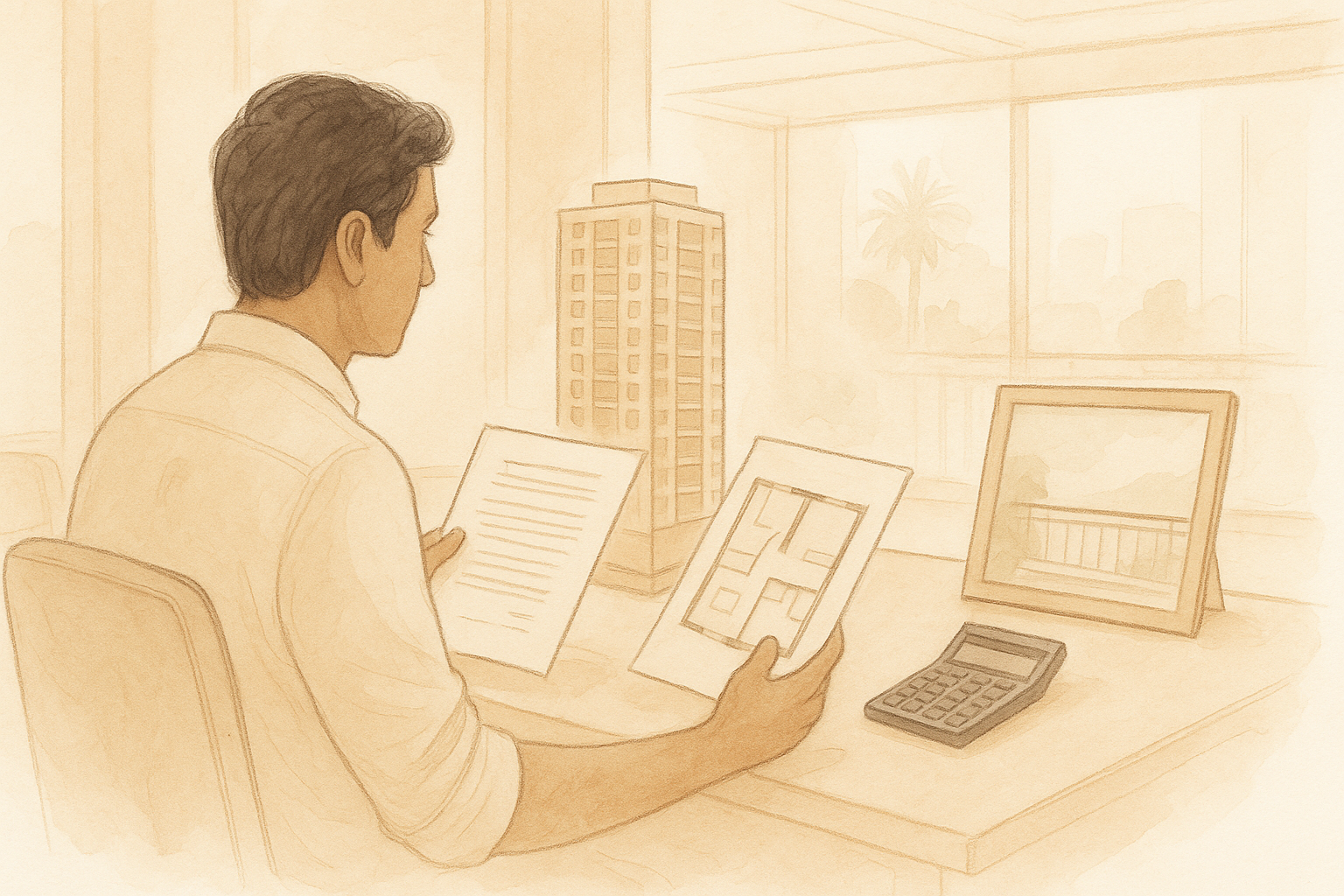
Buying a home in India often starts with one big question: should you buy a ready-to-move property or an under-construction property? The answer is not the same for every buyer, but the risks are very different.
Under-construction homes look attractive because the entry cost feels lower, payment plans are flexible, and you may get more options for floor, view, sunlight, vastu, and layout. But the real cost is not only the booking amount or the quoted rate per sq ft. It includes delay risk, uncertainty in final delivery, financing pressure, and the lifestyle impact of moving into an unfinished project.
For first-time homebuyers in cities like Mumbai, Pune, Bengaluru, Gurugram, Noida, Hyderabad, and Chennai, this decision needs more than brochure comparisons. You need to understand what can change between launch and possession, and what is actually protected by the agreement and RERA registration.
Ready-to-move vs under-construction: what really changes
A ready-to-move flat gives you visibility. You can enter the apartment, check the room sizes, see the balcony view, inspect the lobby, test the lift, look at the clubhouse, and understand the society’s actual condition. You also know whether the promised “city view” is really a city view or blocked by another tower.
In an under-construction property, you are buying a future outcome. You are relying on the brochure, sample flat, floor plan, master plan, builder reputation, and sales commitments. Some of these may be accurate, but many important details become clear only at possession.
The key difference is control. In a ready home, you can verify before paying most of the money. In an under-construction home, you usually pay a large amount before seeing the final product.
Developer risks: layout, view, amenities, and hidden changes
The first risk is the gap between what you imagine and what is delivered. A sample flat can make a home feel larger because of lighting, furniture placement, thinner partitions, or premium interiors. The actual unit may have a slightly different entry, balcony depth, window position, column placement, or usable space.
Master plans are also difficult for first-time buyers to evaluate. Sales teams may show large open spaces, future schools, commercial zones, gardens, internal roads, and clubhouses. But if the project is being developed in phases, some areas may change later depending on approvals, FSI/TDR usage, market demand, or the developer’s plan.
Common developer-side risks include:
- The final layout may feel different from the sample flat or brochure.
- The promised view may be blocked by a podium, wall, future tower, service area, or neighbouring development.
- Amenities may be delivered late, partially, or with different specifications.
- Brand tie-ups for gyms, academies, restaurants, or facility management may change before possession.
- White goods and fittings may be replaced with “equivalent” or “similar category” brands.
- Parking commitments may not match the final allotment if they are not part of the agreement.
- Future development may reduce open space, privacy, sunlight, or ventilation.
In ready-to-move homes, many of these risks reduce because you can inspect the actual condition. You can see whether the gym equipment is usable, whether the clubhouse is operational, whether the internal roads are complete, and whether the building quality feels acceptable.
Possession delays and RERA timelines in India
Possession delay is one of the biggest under-construction property risks in India. Buyers often plan around a four-year delivery timeline, but the legal and practical timeline may be longer. A developer may tell buyers that possession is expected in four years while the RERA completion date is five years away.
RERA has improved transparency, but it does not remove delay risk completely. Developers may get extensions in certain cases, and large projects can be affected by funding issues, approval delays, labour shortages, environmental restrictions, or construction bans.
In North India, especially Delhi NCR, winter pollution control measures can stop or slow construction for weeks. In other cities, monsoon disruption, local approval bottlenecks, utility connections, occupation certificate delays, or litigation can affect delivery. Even when the building looks ready, possession may be delayed because water, electricity, fire NOC, lifts, sewerage, or access roads are incomplete.
For buyers, a delay is not only an emotional problem. It changes your financial plan, rental plan, school admission plan, commute plan, and sometimes your decision to shift cities. If you are buying for self-use, even a one-year delay can create serious pressure.
Before booking, check these RERA-related points:
- RERA registration number and project validity date
- Approved layout and sanctioned building plans
- Phase-wise completion timeline
- Promised possession date in the agreement
- Compensation clause for delay
- Status of approvals, OC/CC milestones, and litigation
- Developer’s past delivery record in the same city
Financial risks: pre-EMI, tax benefits, cost escalation, and capital gains
The financial risk starts with home loan timing. In under-construction properties, many buyers take a loan and begin paying pre-EMI interest as the bank disburses money to the developer. If possession gets delayed, you may continue paying rent plus pre-EMI for longer than expected.
Pre-EMI does not reduce the principal. It is only interest. So if you pay pre-EMI for two extra years due to delay, your actual outstanding loan may remain almost the same, while your total cost of buying the house rises significantly.
Important financial risks include:
- Rent plus pre-EMI can disturb monthly cash flow.
- Tax benefits on home loan principal and interest are generally available after possession, subject to applicable tax rules.
- If possession is delayed, expected tax savings also get delayed.
- Some attractive payment plans may shift risk from developer to buyer.
- Cost escalation clauses may allow extra demand in rare but possible cases.
- If you sold an old house and planned capital gains exemption by buying a new one, delayed possession can create tax complications.
Subvention-style or “developer pays interest” plans need extra caution. Formal subvention schemes were restricted, but some developers still offer reimbursement-based structures. If the developer stops reimbursing interest or the project is delayed, the buyer may have to carry the burden.
This is why the cheapest-looking payment plan is not always the safest. A 10:90, 20:80, or deferred payment plan may sound comfortable, but the cost is usually built into the price. Developers are not giving free money; they are pricing funding cost somewhere in the deal.
Lifestyle risks after possession: dust, noise, amenities, and neighbourhood
Many buyers assume that once possession is given, the problem is over. In phased projects, possession can be only the beginning of another adjustment period. If later towers are still under construction, residents may deal with dust, truck movement, labour activity, noise, blocked internal roads, and temporary safety restrictions.
Amenities may also be delivered in stages. A buyer in Phase 1 may get possession, but the final clubhouse, large garden, sports court, retail plaza, or swimming pool may become fully usable only after later phases. This matters because you may be paying maintenance without enjoying the complete lifestyle that was marketed.
The surrounding social infrastructure also takes time. In new micro-markets such as parts of Greater Noida West, New Gurgaon, Panvel, Sarjapur Road, Tellapur, or outskirts of Pune, shops, clinics, day-care centres, supermarkets, and restaurants become viable only when enough families move in. Until then, daily convenience may be limited.
Neighbourhood fit is another overlooked point. In a ready society, you can observe who lives there, whether families have children, whether senior citizens are comfortable, how the residents’ association functions, and how maintenance issues are handled. In an under-construction project, you are guessing the future community.
A young family may want many children in the society, good play areas, school bus access, and safe internal movement. Retired buyers may prefer quiet surroundings, medical access, senior-friendly lifts, and fewer late-night disturbances. These lifestyle expectations are difficult to judge at launch stage.
The capital appreciation claim: myth, reality, and pricing tricks
A major reason people buy at launch is the promise of capital appreciation. The common pitch is that if you buy early, the project will be worth 30% to 40% more by possession. Sometimes this happens in strong markets, but the calculation is not always as simple as it appears.
A developer’s project price includes land cost, construction cost, funding cost, approvals, marketing, overheads, and profit. Different payment plans are priced differently because the developer’s funding cost changes. If you pay more upfront, the developer may offer a discount. If you pay later through a 10:90 or similar plan, the developer may charge a higher rate.
For example, a project may be advertised at ₹9,000 per sq ft during launch under a down-payment plan. But after adding floor rise, PLC, development charges, clubhouse, power backup, maintenance deposit, GST, and other charges, the effective cost may be much higher. Later, the ready price may be marketed as ₹12,500 or ₹13,000 per sq ft all-inclusive. This creates the impression of strong appreciation, but part of the difference may simply be pricing structure, taxes, and charges.
True appreciation is clearer when you compare like-for-like costs. Compare the total acquisition cost at launch with the realistic resale value after brokerage, taxes, transfer charges, loan interest, and holding period. If you used a home loan, include pre-EMI and rent paid during the construction period.
Real appreciation often becomes stronger after possession, not before it. Once residents move in, amenities function, teething issues are solved, maintenance stabilises, and nearby shops open, the project becomes easier to value and sell. A completed, well-run society in a good location can command a premium because buyers can see the lifestyle.
This does not mean under-construction property cannot generate returns. It means you should not buy only because a sales presentation shows 40% appreciation. The deal must make sense after adjusting for time, risk, taxes, loan cost, and alternative investments such as fixed deposits, debt funds, mutual funds, or equities.
When under-construction property can still make sense
Under-construction homes are not automatically bad. They can be useful when the developer has a strong delivery record, the project is RERA-compliant, approvals are clear, construction progress is visible, and the buyer has enough financial buffer. They are also practical when you do not need immediate possession and want more choice in unit selection.
The biggest advantage is flexibility. You may get better options for floor, tower, facing, sunlight, vastu, balcony view, and unit size. In popular projects, the best inventory is often sold before completion. If your requirement is very specific, waiting for ready-to-move stock may reduce your options.
Use this decision checklist before booking:
- You can afford rent plus pre-EMI for at least 12–24 extra months.
- You have verified the RERA possession date, not just the sales timeline.
- The builder has delivered similar projects in the same market.
- Key promises are written in the agreement.
- You have compared total cost, not only base price.
- You are comfortable with phased construction and delayed amenities.
- You are buying for genuine use or a well-tested investment thesis, not only launch hype.
For first-time end users, ready-to-move homes are often safer because they reduce uncertainty. You may pay more upfront or have fewer choices, but you know what you are buying. For investors or experienced buyers, under-construction property can work if the risk is priced correctly.