Building a House
VastuEssential
Toilet and Bathroom Placement Mistakes
A practical guide to avoiding wrong directions, poor internal layout, and hard-to-fix sanitation planning errors.
11 min read· Last updated 12 Apr 2026
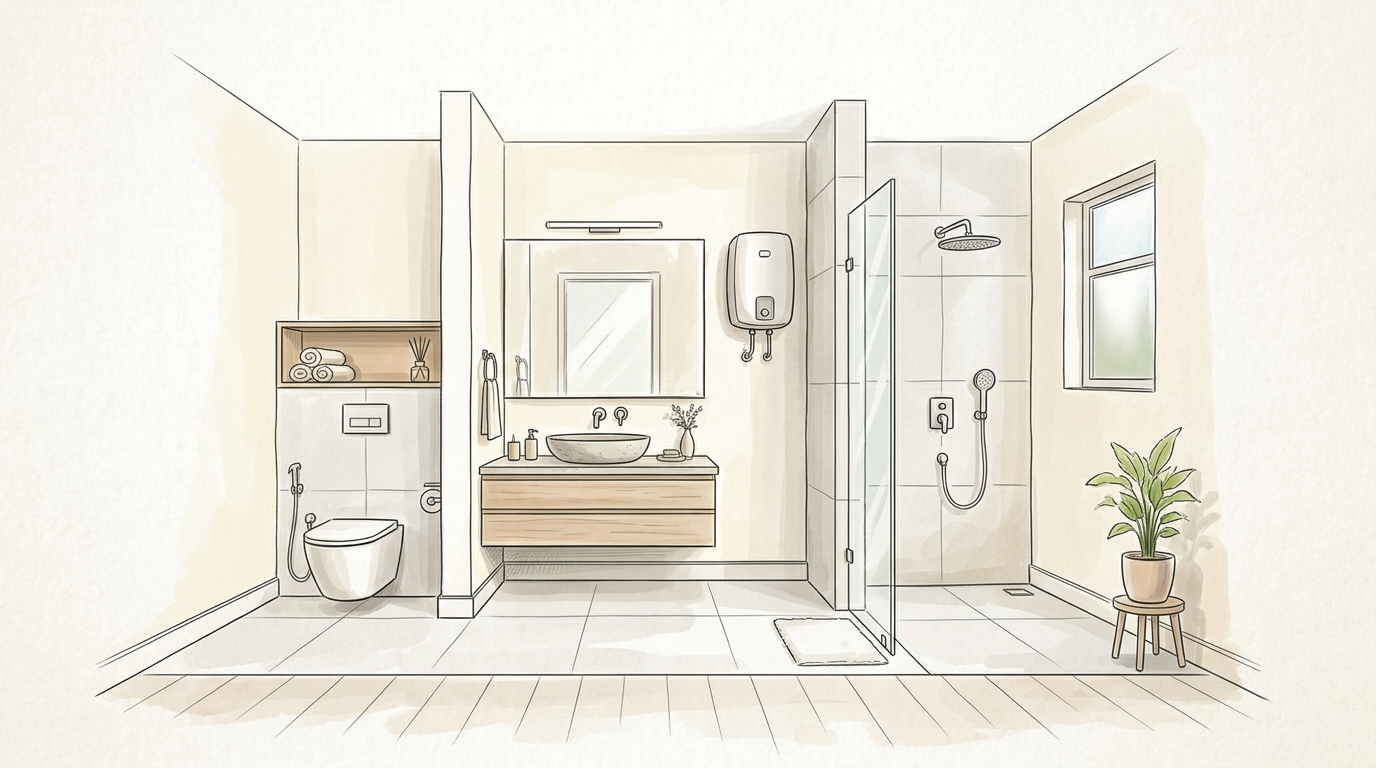
Toilet and bathroom planning creates more Vastu confusion than almost any other part of a home. The problem is simple: modern layouts often combine bathing, toilet use, plumbing shafts, geysers, and drainage into one compact space, while traditional Vastu treats these functions differently.
That is why many flats and plotted homes end up with avoidable mistakes. A layout that looks efficient on a builder brochure in Noida, Pune, or Bengaluru may still place the toilet seat, bathing zone, or drainage in a direction that is treated as weak in Vastu. These mistakes become harder and more expensive to correct after possession.
In Indian homes, the best approach is to catch these issues at the plan stage. If the house is already built, the goal is not perfection but reducing the impact through better use, cleaner layout discipline, and limited remedies where they are considered helpful.
The first mistake is treating toilet and bathroom as the same thing
One of the biggest mistakes is assuming that a bathroom and a toilet can be judged by the same rule. In Vastu, the bathing area is linked with water use and cleansing, while the toilet is linked with waste disposal. Because of that, the recommended directions are not identical.
Broadly, the bathroom is considered better in the North or East, while the toilet is considered better in the West or Northwest. When both are merged into one attached space, the only workable compromise is the north of northwest zone, where the bath area can remain toward the north side and the toilet seat can stay toward the northwest side.
This is where many apartment layouts go wrong. In a master bedroom toilet in Gurugram or Hyderabad, the room may be shown as one compact rectangle, but its internal split still matters. If the bath and WC are simply placed wherever plumbing is easiest, the room may function practically while still creating a Vastu mismatch.
Wrong direction is the most serious placement error
The most common mistake is placing the combined toilet-bathroom in a direction that suits neither function properly. If the attached room is in the North or East, the bathing activity may be better placed, but the toilet portion becomes weak. If it is in the West or Northwest, the toilet becomes more acceptable, but the bathing area loses support.
The problem becomes more serious in Southeast, South, Southwest, or the Brahmasthan, because both functions fall in directions that are generally treated as unsuitable. Vastu also treats the Northeast and the centre with extra sensitivity. A toilet seat in the Northeast or in the Brahmasthan is usually considered a major defect and not something that should be dismissed as a small planning issue.
This matters when you review floor plans from developers. In many 2 BHK and 3 BHK apartments, especially where wet areas are stacked for plumbing efficiency, toilets get pushed into the wrong side of the flat. Before booking, check the exact room position from the centre of the apartment, not just the tower orientation or sales pitch.
Internal layout mistakes make a good room perform badly
Even when the room is in a better zone, bad internal arrangement can create a weaker result. In a bathroom, the shower or tap is preferred in the north of northeast or east of northeast. Heat and electrical items such as the geyser, water heater, and switchboard are better placed in the Southeast of that room. Storage for soaps, shampoo, detergents, and unwashed clothes is better kept toward the Northwest.
Smaller details also matter more than people assume. Water storage buckets or drums are better in the West. The floor slope is preferred toward the North or Northeast, and the drainage outlet is better toward the Northwest. A window on the North or East wall helps ventilation and keeps the wet zone lighter in use.
These points are especially useful in compact Indian bathrooms where every inch matters. In older apartments in Mumbai or Chennai, where retrofitting is difficult, you may not move walls, but you can still correct storage, ventilation, and the location of heat appliances. That improves both practical hygiene and Vastu alignment.
- Keep the bathing point toward the lighter side of the room.
- Keep the toilet seat toward the
Northwestside wherever possible. - Place geysers and electrical fittings in the
Southeastof the room. - Avoid random water storage in weak directions.
- Make sure the room drains well and does not stay damp for long periods.
Certain locations create repeat problems in daily life
Another major mistake is ignoring how the toilet or bathroom relates to the rest of the house. A toilet directly above or below the Pooja Ghar is usually avoided. A pooja room and toilet should also not share a common wall. In duplex homes, a toilet directly above the main door is also treated as a bad planning move.
Attached toilets inside bedrooms need extra discipline. Even when the direction is workable, the toilet door should remain closed as much as possible, and the room must stay clean and dry. This becomes more important in Southeast, South, and Southwest toilet zones, where moisture retention is considered especially undesirable.
These are not abstract rules in practice. In builder floors in Delhi NCR or duplex villas around Ahmedabad, vertical stacking often decides where toilets land. If you are still in the design phase with an architect or civil contractor, checking these overlaps early is far easier than shifting plumbing lines after tiles, waterproofing, and false ceilings are done.
Bathroom direction mistakes are often misunderstood
People often assume that a standalone bathroom is harmless because it does not contain a toilet seat. That is not fully correct. Vastu still gives direction importance to the bathroom because it is a water-use zone. North and East are treated as better positions, while Southeast, Southwest, Northwest, and the centre are handled more carefully.
A bathroom in the Northeast is also treated cautiously because that direction is associated with a sacred and light zone. In the Southeast, the issue is interpreted as water disturbing a fire-dominant area. In the Southwest, the concern is loss of stability. In the Northwest, some traditions associate bathroom placement with relationship imbalance or emotional restlessness.
For homeowners in plotted houses in Indore, Nagpur, or Lucknow, this becomes relevant when utility rooms are added later without a full plan. A bathing room built as an afterthought near the rear setback may solve convenience needs, but if it lands in a weak zone and remains wet, dark, and cluttered, it can create both functional and Vastu dissatisfaction.
Ignoring the septic tank can spoil the whole sanitation plan
Toilet and bathroom Vastu is not only about the room itself. In independent houses, row houses, farmhouses, and some peri-urban plots, the septic tank is part of the same planning chain. Many people spend time checking the WC seat direction but ignore where the underground waste tank is actually being built.
The more acceptable locations for a septic tank are generally West and Northwest. It should not be in the Northeast or in the Brahmasthan, and it should not sit too close to an underground drinking water tank. It is also better to avoid placing it exactly in front of the main gate or main door, or too close to the compound wall or house wall.
This point matters more in tier-2 and tier-3 developments where municipal sewer access is incomplete and septic systems are common. During construction, ask the builder, plumber, or site engineer to mark the septic tank location clearly on the site plan. If it is already built in a wrong direction, traditional guidance treats relocation as the only real correction.
What to do if your toilet or bathroom is already in the wrong place
Once the home is built, remedies are usually treated as support measures, not total fixes. A commonly suggested remedy for a wrongly placed toilet, bathroom, or attached toilet-bathroom is to install a pyramid above the door from the outside. Traditional advice also emphasizes basic maintenance rules such as keeping the room clean, keeping weak-zone toilets dry, and using light colours.
For toilets, many people also use a glass bowl of sea salt to absorb negativity, changing it every 15 to 20 days and discarding it in water rather than a dustbin. This is usually treated as an ongoing supportive practice, not a replacement for correcting bad ventilation, leaks, broken exhausts, or poor hygiene. In bedroom-attached toilets, the door should stay closed as much as possible.
Use this checklist if you are evaluating an existing home:
- Check whether the room is a standalone bathroom, a standalone toilet, or an attached combined space.
- Confirm the exact direction from the centre of the house or flat.
- Check if the toilet seat falls in
Northeastor thecentre. - Review geyser, shower, storage, slope, and drainage positions.
- Make sure the room is clean, ventilated, and not constantly wet.
- Check whether the toilet shares a wall with the pooja room or sits above the main door in a duplex.
- For plotted homes, verify the septic tank location before civil work is finalized.
The most practical lesson is simple: if you still have a choice, choose the better layout instead of depending on remedies later. If the layout is fixed, improve what you can through internal arrangement, dryness, ventilation, and disciplined use. In Vastu, sanitation zones are treated as sensitive areas, so early planning always matters more than post-construction correction.