Building a House
VastuEssential
Pooja Room Placement Guide
Choose the right location, direction, and setup for a peaceful, practical home worship space.
9 min read· Last updated 12 Apr 2026
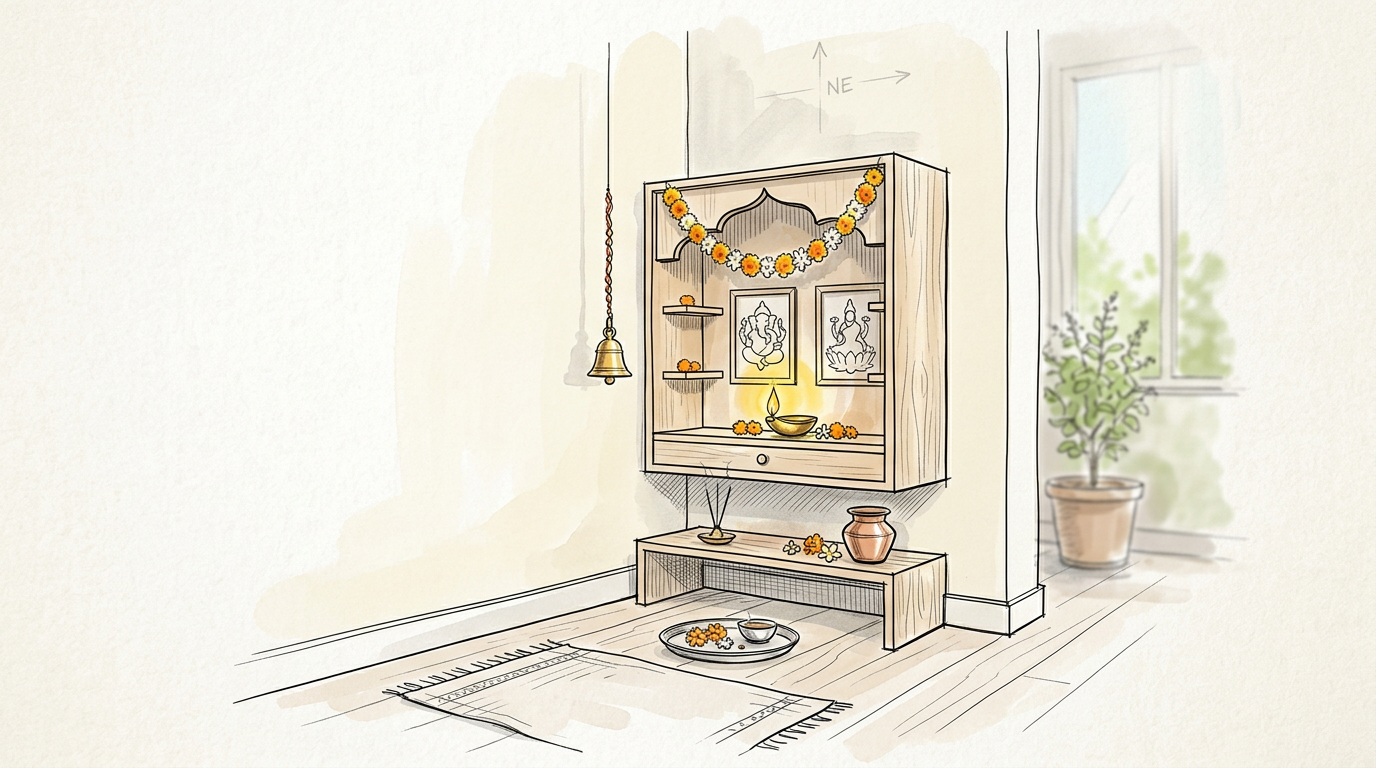
A Pooja Ghar is the dedicated worship space in a home where daily prayers, diya lighting, festivals, and family rituals happen. In Indian homes, this area is not only functional but also emotional, because it often becomes the quietest and most respected corner of the house. Whether it is a full room in an independent house in Jaipur or a compact mandir unit in a Mumbai apartment, placement matters.
For buyers and homeowners, Pooja Ghar placement affects daily use, privacy, ventilation, and overall comfort. It also influences how well the home supports traditional practices without disrupting circulation, storage, or kitchen layouts. That is why many families check the best direction for Pooja Ghar at the design stage itself, especially in new flats in Bengaluru, Pune, Hyderabad, and NCR where compact planning leaves little room for later correction.
Vastu Shastra for Pooja Ghar: Why Direction Matters
Vastu Shastra for Pooja Ghar is based on the idea that different directions carry different types of energy. In most Indian layouts, the northeast, also called Ishan Kon, is considered the most suitable zone for prayer and meditation. This is why many developers and architects still reserve a niche, alcove, or small room in that part of the home, especially in premium projects marketed as vastu-compliant.
Even if you are not strictly following Vastu, direction still has practical value. Morning light from the east can make the worship space brighter and more usable, while a calm corner away from toilets, utility shafts, and heavy movement helps maintain focus. In apartments approved by local authorities such as BDA, HMDA, MCGM, or DDA, the exact floor plan may limit options, so understanding primary and secondary directions helps you make the best possible choice rather than chasing a perfect but unworkable setup.
Tip:
Best Direction for Pooja Ghar
The best direction for Pooja Ghar is generally the northeast. This zone is preferred because it is associated with clarity, light, and spiritual focus. In practical terms, it often works well as a quieter corner that can remain clean and uncluttered. In villas and plotted homes, families often create a separate pooja room here. In apartments, this may be a wall-mounted mandir, a recessed unit, or a small room near the living area.
If northeast is not available, east and north are commonly accepted alternatives. East-facing placement is especially useful for morning prayers, while north can work well in compact homes where room planning is tight. What matters most is that the space is respectful, accessible, and not squeezed into an unsuitable area. A 2 BHK in Noida or Thane may not have a dedicated room, but a properly designed corner in the living-dining zone is usually better than forcing the mandir inside a bedroom wardrobe or above kitchen storage.
Practical Pooja Room Guidelines for Daily Use
Good Pooja room guidelines go beyond direction. The idols or framed deities should ideally be placed at a comfortable height so the person praying can see them without bending awkwardly or looking too high up. In most homes, the platform should not be directly on the floor, and the idols should not be cramped into a deep cabinet with poor ventilation. If you sit for prayer, leave enough clear floor space for an asana or small chowki.
Lighting, finishes, and maintenance matter just as much. Warm lighting works better than harsh white LEDs, and a small window or exhaust helps if incense and diya are used daily. Light shades such as white, cream, pale yellow, or soft wood tones usually keep the space calm. Stone, solid wood, laminate with easy-clean surfaces, and brass accessories are common in Indian homes because they balance durability with tradition. In cities with humidity such as Chennai or Kochi, avoid materials that warp easily; in dusty cities such as Ahmedabad or Gurugram, choose finishes that can be wiped quickly.
Setup checklist before finalizing the space
- Confirm the direction using a reliable compass or floor plan
- Keep the mandir away from direct toilet walls if possible
- Ensure at least one plug point for lighting or bell accessories
- Leave enough standing or sitting space in front
- Plan storage for agarbatti, oil, matchbox, and festival items
- Use easy-clean materials for shelves and back panels
- Check ventilation if diya or dhoop is used regularly
Common Mistakes in Pooja Ghar Placement
One of the most common mistakes in Pooja Ghar placement is forcing it into a leftover space without considering use. This includes placing the mandir under a staircase, directly facing a bathroom, inside a cluttered store area, or above a shoe rack. In many compact flats, people also place the temple in the kitchen because there is no other option, but it should not be right next to the sink, hob, or dustbin. The issue is not only Vastu; heat, grease, and moisture make the space difficult to maintain.
Another major problem is clutter. Festival boxes, old calendars, broken diyas, and unused religious items often collect around the mandir and reduce the calmness of the space. If the pooja unit becomes a mixed-use cabinet for bills, keys, chargers, and medicines, it stops functioning as an Indian home worship space. Cleanliness and energy flow are closely linked in traditional practice, but they also have a simple design logic: a clear, well-maintained area is easier to use daily and easier to respect.
Warning:
Pooja Ghar Cleaning Tips and Maintenance Routine
Pooja Ghar cleaning tips are often ignored until the space becomes difficult to manage. Daily upkeep should be simple: wipe the platform, remove ash, replace stale flowers, and keep oil lamps and incense holders clean. Weekly, clean shelves, brass items, and frames so soot does not build up. If your mandir has carved jaali work or CNC panels, use a soft brush because dust settles quickly in detailed surfaces.
Maintenance also includes controlling smoke, stains, and insects. Use a proper diya tray, avoid overfilling oil, and keep matchboxes and camphor in a dry container. In high-rise apartments in cities like Mumbai, Gurugram, and Hyderabad, enclosed pooja units look neat but can trap heat and smoke if shutters remain closed after use. In such cases, open the unit for some time after prayer and wipe surfaces regularly. A clean pooja space feels better, lasts longer, and avoids the common problem of yellowing walls and sticky shelves.
Shifting Pooja Ghar During Renovation or Moving Homes
Shifting Pooja Ghar is common when families move from rented homes to owned apartments, renovate interiors, or merge rooms for better space use. The process should be handled carefully and respectfully. First, choose the new location properly instead of moving the mandir temporarily from one random corner to another. Confirm direction, electrical points, shelf height, and access before shifting idols, frames, lamps, and sacred books.
Many families also prefer a simple cleansing and preparation ritual before restarting worship in the new place. This can be as basic as cleaning the area thoroughly, using fresh cloth, placing new flowers, and lighting a diya after setup. Others may do a griha pravesh, vastu puja, or a short priest-led ritual depending on family tradition. There is no single mandatory method, but the key is to avoid careless handling, damaged idols, or setting up the space in a rushed and messy way.
Steps for properly shifting the Pooja Ghar
- Finalize the new location based on direction, privacy, and usability.
- Clean the new area completely before moving any religious items.
- Pack idols, frames, lamps, bells, and books separately in soft cloth.
- Move only essential items first and avoid carrying clutter into the new setup.
- Install shelves, lights, and storage before placing the deities.
- Reopen the space with a simple prayer or family ritual as per custom.
- Dispose respectfully of broken or unusable old items instead of storing them.
Choosing the Right Pooja Space When Buying a Home
Homebuyers should evaluate Pooja Ghar placement while comparing properties, not after booking. In a sample flat, developers may show a decorative mandir in the living room, but the actual usable space may be too narrow once furniture is added. Check whether the layout leaves a practical corner in the northeast, east, or north side. In projects by builders such as Prestige, Godrej, Sobha, Lodha, or DLF, interior-ready layouts may differ widely even within the same configuration, so unit selection matters.
Also check surrounding services and walls. A good location for the mandir should not share space with plumbing shafts, washing machine points, or heavy kitchen exhaust areas if avoidable. In resale homes, ask whether previous owners altered the layout and whether the current pooja niche was part of the original plan. If you are working with an interior contractor, insist on exact dimensions, storage planning, and material samples before approval. Good Pooja Ghar placement is not about superstition alone; it is about building a worship space that actually works every day.