Building a House
VastuEssential
Living Room Direction
A practical guide to choosing the right living room zone and arranging it for light, comfort, and balance.
10 min read· Last updated 12 Apr 2026
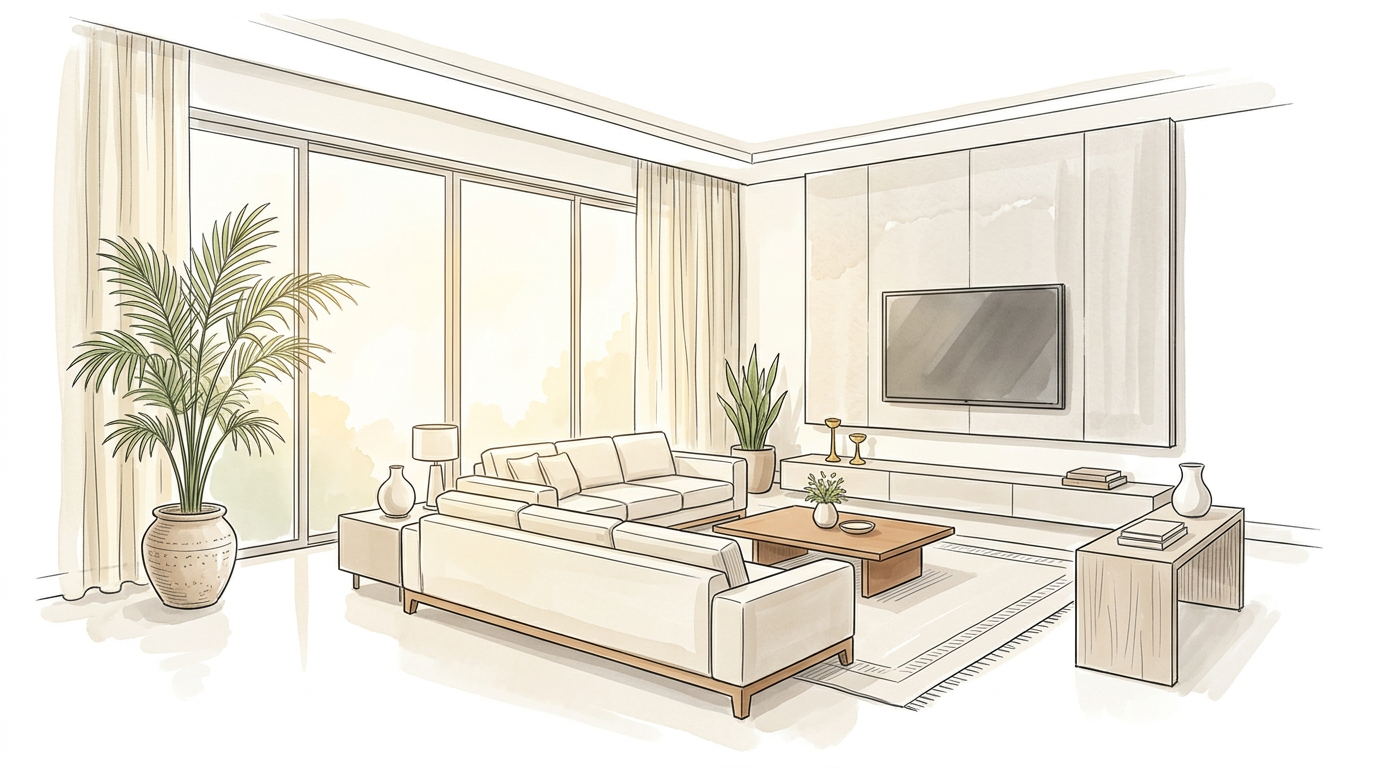
The living room is one of the most active spaces in any home. It is where the family sits together, where guests are welcomed, where conversations happen, and in many Indian homes, where the TV, dining corner, and entrance zone also overlap. Because this room handles movement, interaction, and first impressions, its placement matters in both planning and daily use.
In Vastu, the living room is treated as a space that should remain open, inviting, and easy to energize. That is why direction, sunlight, furniture weight, seating arrangement, lighting, and clutter control are all considered together. When these basics are planned well, the room usually feels lighter, more usable, and better suited to Indian family life.
Choose the best living room direction first
The most supportive directions for a living room are generally from northwest to east. In practical terms, that means northwest, north, northeast, and east are treated as positive zones for a living room, drawing room, or family sitting area. These directions are associated with openness, movement, and fresh light, which suits a room where people gather and guests are received.
North, northeast, and east are especially valued because they are expected to remain lighter and more open. Morning light enters more naturally from these sides, which helps the room feel clean and active early in the day. Northwest also works well because it is linked with movement, making it a suitable zone for guest interaction and social activity rather than long-term stillness.
- First preference: northwest, north, northeast, and east.
- Use these zones for the main family sitting room where possible.
- Keep these sides open enough to benefit from light and circulation.
- Avoid overloading a positive living room zone with heavy furniture and dark interiors.
This rule is especially useful when planning a new floor layout or choosing between multiple builder options. In apartments in Bengaluru, Pune, or Noida, brochures may focus on balcony size or road-facing views, but for actual daily use, a living room in the north, northeast, or east often feels more open and practical. In independent homes, this direction choice can also improve the relationship between the entrance, family seating, and natural ventilation.
Keep the room light and open on the right side
Once the living room direction is fixed, the next step is to maintain the correct weight balance. If the living room falls in the north, northeast, or east part of the house, then the room should remain visually light and open. Lightweight furniture, lighter curtains, and a more breathable layout work better here because they allow light and movement to remain uninterrupted.
If the living room lies more towards the south side of the house, including southeast, south, or southwest, then the room can handle slightly heavier furniture. Stronger fabrics, thicker curtains, and heavier visual anchoring are treated as more suitable there. This is less about decoration alone and more about keeping the room aligned with the heavier and lighter sides of the home.
For Indian homes, this has a direct design impact. A north or east living room in Ahmedabad or Lucknow can use lighter sheers or soft curtains so morning light can enter properly. A south-facing hall in Chennai, Hyderabad, or Nagpur may need thicker cotton curtains to reduce heat and glare. This is a simple example of Vastu aligning with practical climate response rather than competing with it.
Match furniture, curtains, and colours to the room direction
Furniture placement should support the direction of the living room, not fight it. In a north, northeast, or east living room, lightweight sofas, open side tables, and uncluttered movement paths work better than bulky cabinets or oversized statement pieces. In a south-side living room, you can use slightly heavier furniture, but the layout should still remain balanced and not block circulation near the entrance or windows.
Colours should also be chosen according to the room’s position. For north-side living rooms, lighter colours such as white, cream, soft green, and gentle yellow are treated as supportive. For south-side living rooms, light shades of brown or muted red can be used, but very dark tones are best avoided because they make the room feel heavy and visually compressed.
- Use lightweight furniture in north, northeast, and east living rooms.
- Use slightly heavier furniture in southeast, south, and southwest living rooms.
- Use lighter curtains in the north and east to let morning light enter.
- Use thicker cotton curtains in stronger sun-facing southern rooms.
- Prefer light, warm colour palettes over dark, heavy finishes.
In modern flats, this becomes important when modular furniture and false ceilings are planned together. A bright east-facing living room in Mumbai can look cramped if it gets a dark TV wall, a bulky shoe rack, and heavy drapes all at once. A better approach is to keep the lighter side visually open and let the heavier pieces sit where they do not block natural light.
Arrange seating, TV, and dining the right way
The seating arrangement in the living room is not treated randomly in Vastu. The head of the family is ideally expected to sit in the southwest part of the living room and face north, northeast, or east. The logic is that this position gives stability while also allowing the person to face the more positive and open directions of the room during conversation or family time.
The television should also be positioned so that while watching it, people face north, northeast, or east. This is useful in practical planning because TV walls often become the heaviest focal point in the room. Instead of putting the television wherever there is an empty wall, it is better to choose a location that supports both viewing comfort and directional logic. If a dining table shares the same hall, northwest is generally treated as a suitable zone for it.
For Indian apartment layouts where the living room, TV room, and dining area merge into one rectangle, this guidance can help a lot. In a 2BHK in Gurugram or Thane, for example, the sofa can be anchored closer to the southwest side of the hall, the television can go on a wall that allows the family to face east or north while watching, and the dining table can shift towards the northwest without interrupting the entry movement.
Use décor and remedies that support the room
Decor in the living room should support calmness and positivity rather than make the room feel crowded or emotionally heavy. Family photographs can be placed on the southwest wall. Paintings and wall art should feel pleasant, uplifting, and peaceful. Images associated with sadness, conflict, or negativity are generally avoided in this room because the living room is the most socially exposed part of the house.
If the living room lies in the north, northeast, or east, then elements like a small pooja unit, water fountain, or aquarium may be accommodated there. These should not be forced into other directions casually. Since this room is open to visitors, another suggested practice is to keep sea salt in a clear glass bowl in the living room and change it every fifteen days. It is treated as a simple cleansing measure and should be discarded in flowing water such as a sink, not thrown into dry household waste.
- Place family photos on the southwest wall.
- Use happy and pleasant paintings in the room.
- Keep lighting bright and comfortable, not dim.
- Keep the room clean and free from clutter.
- Change sea salt kept for cleansing every 15 days.
- Discard used salt in water, not in the dustbin.
This section is particularly relevant in resale flats and compact urban homes where the living room becomes a storage spillover zone. Shoes, parcels, school bags, folded dining chairs, ironing stands, and random décor often accumulate here first. Even when the direction is good, the room starts feeling heavy if daily clutter is allowed to take over. Vastu advice works better when the room remains functionally clean, not just visually decorated on special occasions.
Avoid common living room mistakes near the entrance
One of the most common mistakes in Indian homes is placing the wrong kind of furniture near the entrance-living room connection. In many flats, the main entrance opens directly into the hall, and a shoe rack gets installed just inside the door. Vastu is cautious about this, especially when the entrance is in the northeast. In such a case, a shoe rack near that zone is best avoided because it adds clutter and heaviness where the space is expected to remain cleaner and lighter.
Another common mistake is using bulky or irregularly shaped furniture in the living room. Odd shapes reduce movement clarity and break the clean flow of the room. A heavy chandelier in the exact center, dim lighting, overcrowded corners, and dark decorative choices can all make the hall feel visually compressed. Since the living room is the first shared space people experience, these mistakes affect both comfort and the overall impression of the home.
This is where layout discipline matters. If the entrance opens into the hall, plan shoe storage carefully and keep it away from sensitive zones. If the living room doubles as a TV room and family room, choose clean-lined furniture that fits the room scale. If the room is small, avoid trying to fill every wall. In cities where apartment sizes are shrinking, smart restraint is often more useful than decorative excess.
Make the living room work in real Indian layouts
In actual Indian housing, the living room often has to do many jobs at once. It may connect to the foyer, contain the television, share space with the dining table, include a prayer niche, or act as the main guest reception room. That is why the direction alone is not enough. The room must also be zoned correctly inside, with light sides kept open and heavier functions placed without blocking flow.
For a practical Vastu-friendly result, start by checking where the living room sits, then decide what should remain open, where the family seating should go, how sunlight should be managed, and which decorative elements are actually necessary. A family in a plotted house in Jaipur may have the freedom to position the hall in the northeast and keep it naturally open. A buyer in a ready apartment in Chennai may not control the room direction, but can still improve the hall substantially through lighter furniture, correct seating, bright lighting, and clutter control.
- First check the room direction on the floor plan.
- Keep north, northeast, and east visually lighter and more open.
- Anchor key seating from the southwest side of the room where possible.
- Position the television so viewers face north, northeast, or east.
- Avoid clutter, dim lighting, and irregular bulky furniture.
When applied this way, Vastu becomes a planning tool rather than a decorative superstition. It helps organize the room for guest movement, sunlight, furniture weight, and everyday use. That makes the living room easier to maintain and more comfortable to live in, whether the home is a compact flat, a duplex, or a larger independent house.