Building a House
Finishing & InteriorEssential
Flooring & Material Selection Guide
A practical guide to choosing tiles, finishes, and installation details that improve look, durability, and long-term value.
11 min read· Last updated 12 Apr 2026
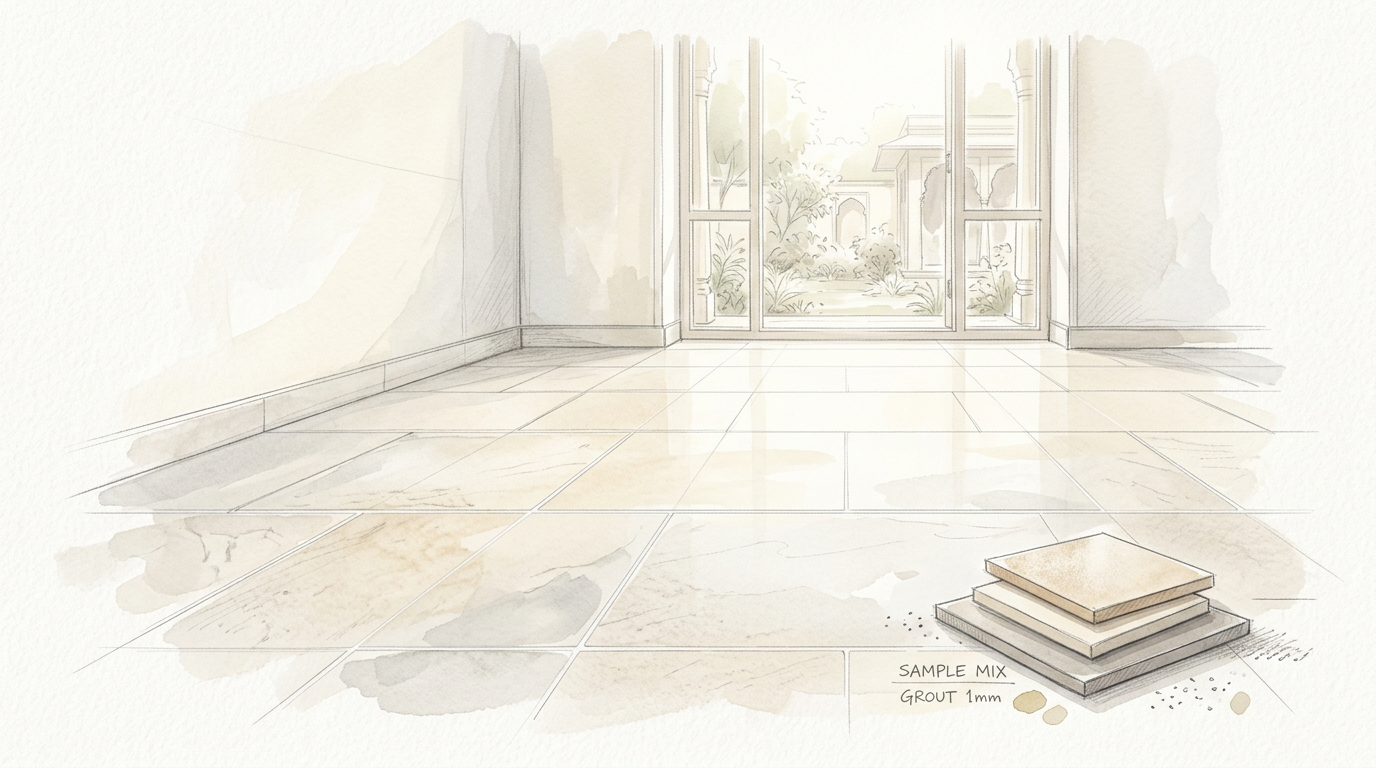
Why Flooring Should Be Planned First
Flooring is not a background decision. In most Indian homes, it occupies the largest visible surface after the walls, which means it quietly controls the tone of the entire room. A bedroom in Pune, a 2BHK in Bengaluru, or a builder floor in Delhi can all look more refined or more ordinary depending on the flooring choice, even before furniture and decor are added.
That is why flooring should be decided early in the design process, not at the end of the renovation. Once the floor tone, finish, and tile size are fixed, it becomes much easier to choose wall colors, laminates, curtains, sanitaryware, and lighting. If the flooring is selected casually, the rest of the home often feels mismatched even when each individual item looks good on its own.
Style matters here, but it should reflect the way the home is meant to feel. Plain beige, off-white, greige, and soft grey tiles usually suit calm, minimal, contemporary, or Scandinavian interiors. Patterned tiles, handmade looks, terrazzo effects, and stronger visual movement suit more expressive homes where the owner wants warmth, craft, or personality. The key is not to chase trend-first flooring, but to choose a surface that supports the room for years.
Understand Tile Materials Before Comparing Designs
Most buyers spend too much time on the front surface and too little time on the actual tile body. For everyday residential use, the first material distinction to understand is simple: ceramic tiles are primarily better suited for walls, while vitrified tiles are the safer choice for most flooring. The reason is performance, not marketing language.
Ceramic tiles are lighter and usually bond well to vertical surfaces, which makes them practical for bathroom walls, kitchen dado areas, and feature wall cladding. They also absorb more moisture than vitrified tiles. That higher absorption is one reason ceramic is less suitable for floors that face foot traffic, wet mopping, dragged furniture, or regular wear. If used on the floor, they are more likely to stain, chip, or crack over time.
Vitrified tiles are denser, stronger, and designed to handle floor loads better. In living rooms, passages, dining areas, and bedrooms, vitrified flooring generally offers better durability and easier maintenance. If you need extra grip in wet zones, look for anti-skid vitrified tiles rather than assuming any matte tile will do the job. In many projects, buyers confuse matte finish with anti-skid performance, but the two are not automatically the same.
Choose Size, Finish, and Surface Based on the Room
Bigger tiles usually make a room look more seamless and premium because they reduce joint lines. That is why large-format tiles are popular in newer apartments in Gurgaon, Hyderabad, and Ahmedabad where buyers want a cleaner, more luxurious finish. In compact homes too, fewer grout joints can make the floor feel visually calmer. But large format should not be selected only for appearance. It also needs flatter subfloor preparation, careful handling, and better installation quality.
Smaller tiles still have an advantage in certain situations. They are often easier to lay in tight bathrooms, balconies, utility areas, and irregular layouts with many corners. They can also perform better where slope creation is important, especially in shower areas or wash zones. So the right question is not whether large tiles are always better, but whether the room layout, slope requirement, and labor quality can support them properly.
Finish should be tied to use. Glossy tiles reflect more light and can brighten darker rooms, but they also show scratches, streaks, and water marks more easily. Matte tiles feel calmer and are easier to live with visually, especially in high-use family homes. For kitchens, bathrooms, and utility spaces, slip resistance matters more than visual softness. In visible edge applications such as counters, step cladding, or places where tile sides may show, full-body or better-finished edge-friendly options are often worth considering because the exposed section looks more consistent.
Pick Flooring According to Usage, Not Just Price
Different parts of the same home need different flooring logic. Living rooms and bedrooms usually benefit from durable vitrified tiles in plain or lightly textured finishes because these spaces need a balance of appearance, maintenance, and comfort. In kitchens, utility areas, and bathrooms, water exposure changes the decision. There, anti-skid surfaces become more important than gloss, and ease of cleaning should be checked before purchase.
High-traffic areas also need better wear performance. Main entrances, corridors, family lounges, and homes with children or elderly residents see constant movement, dragged stools, rolling chairs, delivery traffic, and repeated mopping. In such zones, choosing a more durable printed surface can help the floor hold its look longer. A tile that appears attractive in the showroom may start looking dull if the surface layer is not suited for daily wear.
This is where practical zoning helps. A Mumbai apartment may use one calm floor tile through the living, dining, and bedrooms for continuity, then shift to anti-skid flooring in bathrooms and utility spaces. A duplex in Noida may use one larger premium-format tile in formal areas and a more utility-focused surface in back-of-house zones. Good flooring selection is not about making every room identical. It is about making the transitions look intentional while allowing each area to perform properly.
Budgeting, Brand Decisions, and Smart Buying
Flooring costs are more than the tile price printed at the store. In a renovation project, you may first pay for demolition of old flooring, then the tile itself, adhesive or cement-sand bedding, labor, cutting, leveling, and grouting. In many Indian cities, this is why a tile that looks affordable per square foot can still lead to a much larger final installed cost. Buyers who compare only showroom rates often underestimate the real project budget.
At the lower end, ceramic wall tiles and basic vitrified floor tiles can look inexpensive, but average home selections usually move into a middle range quickly once you add decent size, better finish, and wastage allowance. In practical terms, many standard home flooring jobs land closer to an installed cost range rather than a single product rate. The final amount also changes based on tile size, brand, location, floor condition, and whether the home is occupied during the work.
Branded and non-branded tiles both exist in the market, and the gap is not always dramatic in appearance. For budget-sensitive projects, non-branded tiles can still work well if you inspect them carefully and buy from a reliable dealer. However, larger tiles generally leave less margin for warping or dimensional inconsistency, so better manufacturing control matters more there. Also, if you are choosing non-branded tiles, buy the full quantity in one lot and keep extra stock. Shade variation between batches can make later matching difficult.
Installation Quality Decides Whether the Floor Lasts
Even a good tile can fail if the laying process is careless. One of the easiest signs of experienced labor is layout discipline. Skilled installers usually establish a controlled reference pattern before moving across the floor, so the alignment stays true and cuts look balanced near walls. Poor labor often starts too quickly, produces awkward edge cuts, and leaves a floor that looks acceptable from far away but visibly inconsistent up close.
Cutting quality also matters. Clean edges, proper tools, and careful corner finishing decide whether the installation looks sharp or cheap. In addition, the bedding mix or fixing method has to be correct for the tile and the site condition. If the base is weak, too dry, too rich in cement, or poorly leveled, tiles may debond, sound hollow, or crack later. In bathrooms and balconies, the slope must also be checked before the work is signed off, not after the fittings are installed.
Grouting is the last detail many homeowners ignore, but it has a direct effect on maintenance and life. Good grout selection, correct filling, and improved durability additives help the joints hold up under cleaning and moisture exposure. Weak grouting begins to powder out, trap dirt, or open up, which is why some homes start needing repeated repairs far too early. A floor should not only look good on handover day. It should still perform well after one monsoon, one summer, and years of regular use.
A Simple Checklist Before You Place the Order
Use this checklist before finalizing any flooring purchase for your home:
- Confirm where each tile will be used: wall, dry floor, wet floor, balcony, utility, or counter.
- Check whether the tile is ceramic, vitrified, anti-skid vitrified, or another specific category.
- Choose tile size according to room dimensions, slope needs, and labor skill.
- Test wet-surface grip in bathroom and kitchen tiles instead of trusting finish names alone.
- Review at least one full tile in natural light, not just under showroom lighting.
- Compare two or three boxes for shade consistency and surface flatness.
- Ask for the same batch quantity and buy extra pieces for future replacement.
- Budget for demolition, labor, raw materials, cutting, leveling, and grouting, not only for the tile rate.
- Confirm the laying pattern, edge cuts, and grout quality with the contractor before work begins.
- Use better manufacturing quality for larger tiles where warping can create more waste.
If you want the safest decision path, start by fixing the use-case first, then narrow the material, then the finish, then the size, and only after that compare designs. This order protects you from buying a beautiful tile that is wrong for the job. It also helps conversations with contractors stay practical, because the choice is anchored in performance instead of only taste.
In Indian home projects, flooring mistakes are expensive because they are disruptive to undo. Replacing a wrong paint shade is easy. Replacing wrongly selected or badly installed tiles means dust, demolition, debris disposal, labor coordination, and avoidable cost. That is why flooring deserves more technical attention than most homeowners give it. A good floor should look right, feel safe, and age well without demanding constant repair.