Building a House
Buying LandEssential
Choose the Right Plot for House Construction
A practical India-focused checklist to help first-time home builders avoid costly land mistakes
10 min read· Last updated 12 Apr 2026
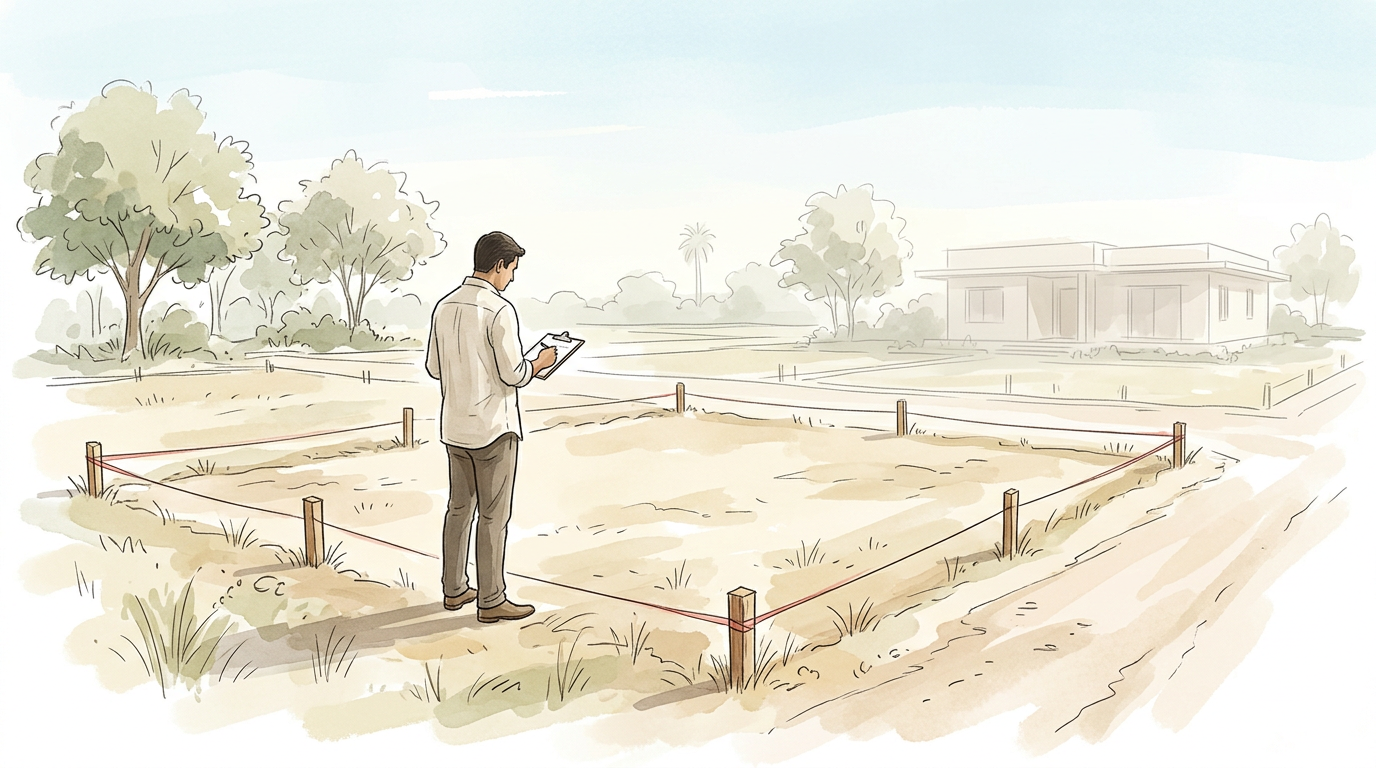
Choosing the right plot is the most important decision in the home-building journey. A well-located, legally clear, build-friendly plot makes design easier, keeps construction costs under control, and protects resale value. A poor plot does the opposite: it creates design compromises, drainage problems, legal disputes, and ongoing stress.
For most first-time home builders in India, the goal is simple. You want land that is easy to build on, safe to live in, compliant with local rules, and practical for family life. That means you should evaluate a plot in five layers: location, shape and size, site condition, legal status, and future livability.
Start with location and everyday convenience
Begin with the basics that affect daily life. A good residential plot should have smooth access to a main road, schools, hospitals, grocery stores, and public transport. In cities and growth corridors, easier access usually improves both livability and long-term value. A plot that looks cheaper only because it is too far inside an undeveloped pocket can become expensive later through poor access, delayed infrastructure, and lower resale demand.
Pay close attention to the neighborhood as well. A decent residential area should feel safe, reasonably quiet, and free from obvious nuisance sources such as factories, scrapyards, heavy truck movement, open drains, or constant dust. If you plan to live there for years, the quality of the surrounding colony matters as much as the land itself. Even a technically good plot becomes less desirable if the area has poor civic upkeep or weak social infrastructure.
Pick the right shape, frontage, and proportion
The easiest plots to plan are square or rectangular. These shapes reduce dead corners, improve room layout, and help you use the available area more efficiently. Irregular, triangular, tapered, or cut-corner plots often lead to wasted space, awkward room planning, and higher construction complexity. They can also reduce resale appeal because future buyers face the same planning problem.
Frontage matters more than many buyers expect. A narrow-front, extra-deep plot may look affordable on paper, but it often behaves like a corridor. It becomes harder to plan parking, stairs, ventilation, and room widths properly. As a rule, avoid plots where depth is disproportionately high compared with width. Mid-sized residential plots with balanced proportions, such as around 20 x 45, 25 x 50, or 30 x 60 feet, usually offer much better planning flexibility than long, narrow plots like 15 x 60 or 20 x 70.
Check road width, plot level, and drainage first
The front road affects access, parking, safety, and future usability. A plot on a very narrow lane may create problems for car entry, material unloading, emergency access, and day-to-day movement. In many areas, a wider road also improves marketability. For a normal independent house, a front road of about 20 feet or more is usually far more comfortable than a cramped internal lane. If local building rules prescribe minimum road width for sanction or setbacks, verify those rules before committing.
The plot level should also be checked carefully. A plot that sits much lower than the road can become a waterlogging trap during heavy rain. It may also require large filling work before construction, which adds cost and time. Ideally, the site should be at or slightly above road level, or at least capable of being raised without excessive earth filling. Ask nearby residents what happens during monsoon, not just during dry weather. Flood history tells you more than a one-time site visit.
Test soil, natural ground, and buildability
Soil condition directly affects foundation cost. Stable soil can support a normal footing system, while loose fill, black cotton soil, highly clayey soil, or reclaimed land may require deeper foundations or special structural treatment. That increases cost quickly. If the plot is on suspicious ground, recently filled land, former low-lying land, or a site that looks unevenly raised, get a basic geotechnical opinion before purchase. This is especially important if you plan a multi-storey house.
Also verify whether the plot is on natural ground or on filled material. In some layouts, low land, pond edges, or old pits are filled and sold as ready plots. If the fill is poor, settlement cracks and foundation issues may appear later. Inspect surrounding plots under construction, ask local masons about soil depth and water table, and look for clues such as fresh fill, debris under topsoil, or unusual dampness. A small spend on soil verification can save a very large spend during construction.
Verify legal status before you discuss design
Legal clarity comes before facing, aesthetics, or price negotiation. Confirm that the seller has a clear and transferable title, and that the plot falls under legally permitted residential use. In India, terminology varies by state, but the essentials remain the same: sale deed or title deed, prior chain documents, encumbrance certificate, mutation or revenue record update, property tax status, identity of the seller, and valid approvals for the layout. If the land was originally agricultural, confirm lawful conversion to non-agricultural or residential use wherever required.
You should also check whether the plot is part of an approved layout from the relevant authority, such as a development authority, town planning authority, municipal body, or state planning agency. Do not rely on phrases like "future approval" or "approval under process." Also verify applicable building rules such as setback requirements, land use zoning, road widening impact, and FSI/FAR limits. A plot may be legally owned but still unsuitable for the type of house you want to build.
If the seller is acting through a power of attorney, get that examined carefully. If there is an existing loan, pending dispute, family claim, or unclear inheritance trail, do not move ahead casually. Use a property lawyer for document review and a licensed surveyor to confirm actual boundaries on site. A bank home loan or plot loan can add an extra layer of scrutiny, but it should support your due diligence, not replace it.
Review surroundings, orientation, and long-term value
A plot should work not only today but also ten years from now. Check what exists around it and what is planned nearby. New highways, metro corridors, schools, commercial hubs, or township development can improve value. At the same time, future high-tension lines, storm-water channels, road widening, industrial activity, or noisy transport corridors can reduce comfort. A quick review of the local master plan or development map can reveal whether the area is actually residential in the long run.
Orientation matters too, but it should be treated sensibly. In Indian conditions, north- and east-oriented plots are often preferred because they support better daylight planning, thermal comfort, and market demand. Some buyers also prioritize them for Vastu reasons. That is valid if it matters to you, but direction should come after legality, drainage, road access, and soil stability. A legally clean, well-drained west-facing plot is usually a better choice than a disputed or badly shaped east-facing one.
Avoid obvious surrounding red flags: a dead-end termination directly onto the plot, very large buildings squeezing a small site, open sewage lines, railway tracks too close to the plot, burial grounds immediately adjacent, or a location with chronic noise and odor. These issues affect comfort, health, and resale more than buyers initially expect.
Use this final screening checklist before paying advance
Treat the final decision like a verification exercise, not an emotional purchase. Once a plot clears this checklist, then move to token payment, agreement, and registration. If even one major issue remains unclear, pause and verify it first.
- The plot is in a usable residential location with good road connectivity.
- The neighborhood has acceptable safety, services, and basic civic infrastructure.
- The shape is square or rectangular, and the dimensions allow practical planning.
- The road width is adequate for access, parking, and future convenience.
- The site is not significantly lower than road level and does not face regular flooding.
- Soil, groundwater, and natural ground condition appear suitable for house construction.
- The plot boundaries on site match the documents and survey details.
- Ownership, title chain, encumbrance, and tax records have been verified.
- Land use and layout approvals are valid for residential construction.
- Local building rules, setbacks, and FSI/FAR will allow your intended house size.
- There are no visible red flags in the surroundings that will hurt livability or resale.
- A lawyer and, where needed, an architect or engineer have reviewed the plot before payment.